
Information checked: 23 October 2026. The earlier article used the school week beginning 2 September as its setting. This revision does not carry forward the unverified assumption that lunch-box and drink orders increased. The immediate question is whether another meal can go into an insulated bag after soup, rainwater or other contamination has entered it. Stop loading new meals into the affected bag, box, divider or cup holder until cleaning is complete and its usable condition has been confirmed; do not routinely leave the problem until the end of a shift.
Taiwan's 2019 voluntary hygiene guidelines for delivery platforms (Traditional Chinese) address cleaning containers before loading and keeping records, separating hot and cold food, and preventing cross-contamination. They guide platform operators; they are not cleaning instructions for a particular bag or proof that one wipe disinfects it. First find the material label and the manufacturer's use and cleaning instructions: whether washing is allowed, which parts can be removed, and what treatment and drying are required. If instructions are missing, ask the manufacturer or an appropriate platform contact rather than inventing a cleaning mixture.
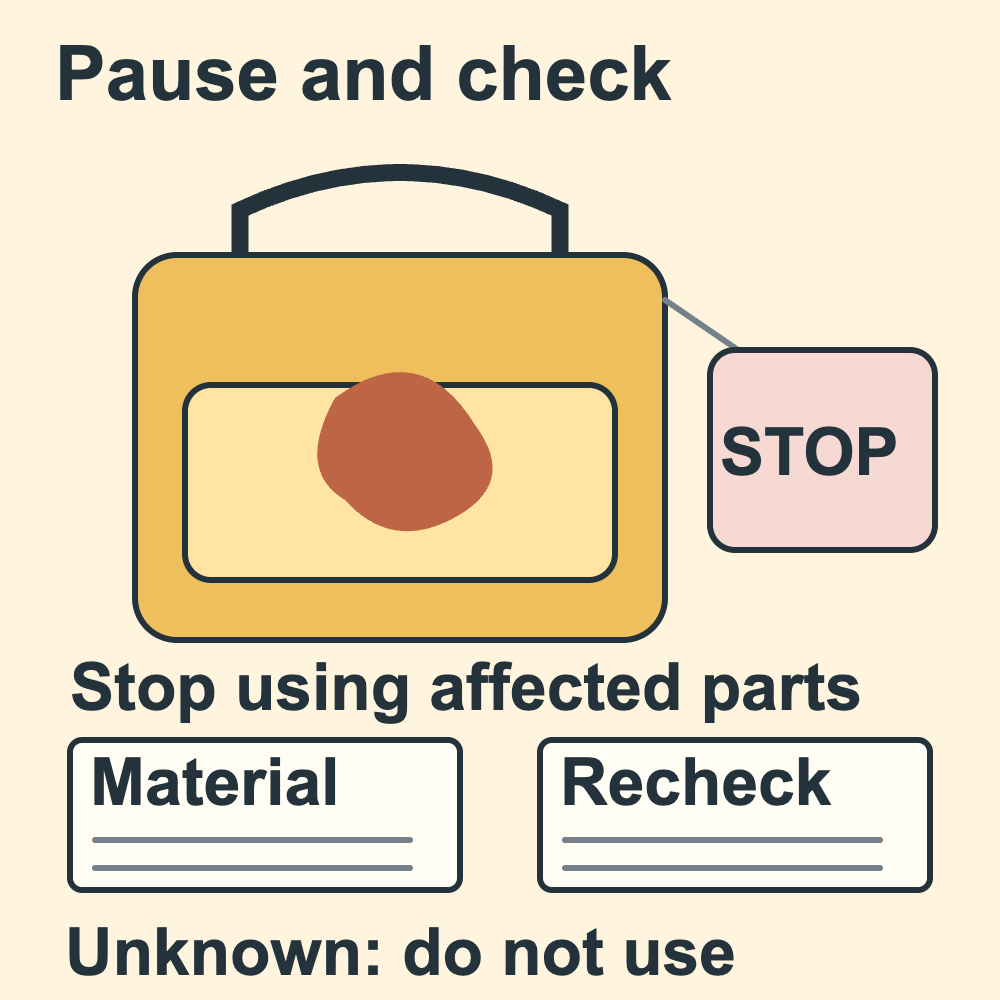
When a problem appears, stop safely in a suitable place. Record the time, affected area and visible condition: liquid on a cup holder, base, lining or outer bag, for example. Mark affected parts as temporarily out of use so they are not loaded again by habit. If meals are already inside, do not open them, transfer their contents or approve delivery from appearance alone. Keep necessary order information, describe what you can see to an appropriate platform or shop contact, and ask how the meals currently in transit should be handled. This article does not decide liability, compensation or whether food is safe.
Use this record for cleaning and a possible return to use, filling it only with your actual information:
- Bag and parts: brand/model or identifying mark ____; material label ____; affected area ____; time discovered ____.
- Basis for the work: version or source of manufacturer instructions ____; permitted cleaning method ____; prohibited methods ____; items with no instructions ____.
- Work actually completed: when and by whom ____; steps completed and the instructions followed ____; whether required drying or other follow-up conditions were completed ____.
- Recheck: remaining residue, pooled water, odour, torn lining, inaccessible dirt or structural problems ____; parts still in doubt ____.
- Use status: remain out of use / await manufacturer or platform clarification / treatment completed under obtained instructions and condition rechecked ____; evidence and time for that assessment ____.
“Looks clean” and “has no smell” are observations, not proof that contamination is absent. Completing the record is not certification. Keep the affected parts out of use while material, method, follow-up conditions or usable condition remain unconfirmed. If considering another container, check that container against applicable carrying, cleanliness and platform requirements too; taking the old bag out of use does not establish that a substitute is suitable.
Cleanliness and secure loading are separate checks. Before loading again, check whether the cup holder, dividers and bag itself can be positioned and secured properly; closing the zip does not complete every check. Continue with the loading and securing checks. This article supplies no universal load limit, holding temperature, transport time or cleaning-agent quantity, and general checks do not replace conditions specified for particular meals.
Record each leak or entry of rainwater as it happens; last week's cleaning does not settle today's condition. Find related bag and pickup situations in the delivery-experience category, checking any method against your own equipment and applicable instructions. Decide where the next meal can go only after cleaning is complete and usable condition has been checked.