Food Delivery Experience

On September 2, the first week of school, delivery drivers will check that their insulated bags are clean, that hot and cold items are separated, that beverages are secured, and that deliveries are made even in the rain.

With the start of the school year on September 2, the selection of beverages for school lunches has expanded—how should delivery drivers handle the cleaning and handover of insulated bags?

In 2026, there was an increase in lunchbox, beverage, and group-order food delivery requests during the first week of school. Based on data from the Food and Drug Administration and food delivery platforms, this article provides guidance on cleaning insulated bags, separating hot and cold items, securing beverages, ensuring waterproofing on rainy days, and conducting delivery inspections to help delivery riders reduce the risk of contamination and spills.

With the start of the school year on September 2, the selection of beverages for school lunches has expanded—how should delivery drivers handle the cleaning and handover of insulated bags? Read Post »

During the first week of school starting on September 1, delivery drivers will be assigned routes around schools, during the dinner rush, and on rainy days.

Delivering food during the first week of school on September 1: How to plan routes around campus and during the dinner rush

During the first week of the school year in September 2026, food delivery riders will need to reassess the traffic flow around schools during pick-up and drop-off times, the dinner rush, afternoon rain, and fuel costs. This article outlines optimal times for accepting orders, pickup locations, safety rules, and bookkeeping checks; however, it does not guarantee earnings on any specific route.

Delivering food during the first week of school on September 1: How to plan routes around campus and during the dinner rush Read Post »

Illustration depicting the daily life of a Taiwanese food delivery rider: delivery motorcycle, road conditions, and pre-shift preparations. Accompanies the article “How to Make the Most Money During Peak Hours: The Logic Behind Skipping Orders, Combining Orders, and Selecting Orders.”

How to Accept Orders Most Profitably During Peak Hours: Decision-Making Logic for Skipping, Combining, and Selecting Orders

Taking every order during peak hours may actually lower your hourly wage. This article outlines how to assess pickup, delivery, waiting times, route optimization for combined orders, and return trip costs, helping delivery riders set their own order acceptance thresholds based on their schedules and performance data—rather than relying on a single route as a guarantee of income.

How to Accept Orders Most Profitably During Peak Hours: Decision-Making Logic for Skipping, Combining, and Selecting Orders Read Post »

Illustration depicting the situation of food delivery riders in Taiwan: visibility and safety precautions when making deliveries in the rain, at night, or in high temperatures. Corresponding article: “How to Avoid Slipping While Delivering Food in the Rain: Safety Checks Before Leaving, When Picking Up Orders, and Upon Delivery.”

How to Avoid Slipping While Delivering Food in the Rain: Safety Checks Before You Leave, When Picking Up Orders, and Upon Delivery

When delivering food on rainy days, the biggest concern isn’t getting wet—it’s the simultaneous deterioration of visibility, traction, and parking conditions. This article outlines pre-trip checks, anti-slip measures while on the road, procedures for picking up and delivering orders, and criteria for suspending deliveries. It also reminds riders to make decisions based on information from the Central Weather Bureau, local weather alerts, and platform announcements.

How to Avoid Slipping While Delivering Food in the Rain: Safety Checks Before You Leave, When Picking Up Orders, and Upon Delivery Read Post »

Illustrations depicting the work of Taiwanese food delivery riders: meal delivery, temperature control, and pickup procedures, accompanying the article “It’s Not Just About Fitting Everything in the Insulated Box: Food Safety Procedures for Delivery Riders—Pickup, Separation, Cleaning, and Delivery.”

It’s Not Enough for an Insulated Box to Just Fit the Food: Food Safety Procedures for Delivery Drivers—Picking Up, Separating, Cleaning, and Delivering Meals

Food safety for delivery meals depends on every step of the process—from the cleanliness of the insulated boxes and whether hot and cold items are stored separately, to pickup, stops along the route, and delivery. Break down official requirements into practical procedures that can be followed during a delivery run to minimize the risk of issues with the food while it’s on the road.

It’s Not Enough for an Insulated Box to Just Fit the Food: Food Safety Procedures for Delivery Drivers—Picking Up, Separating, Cleaning, and Delivering Meals Read Post »

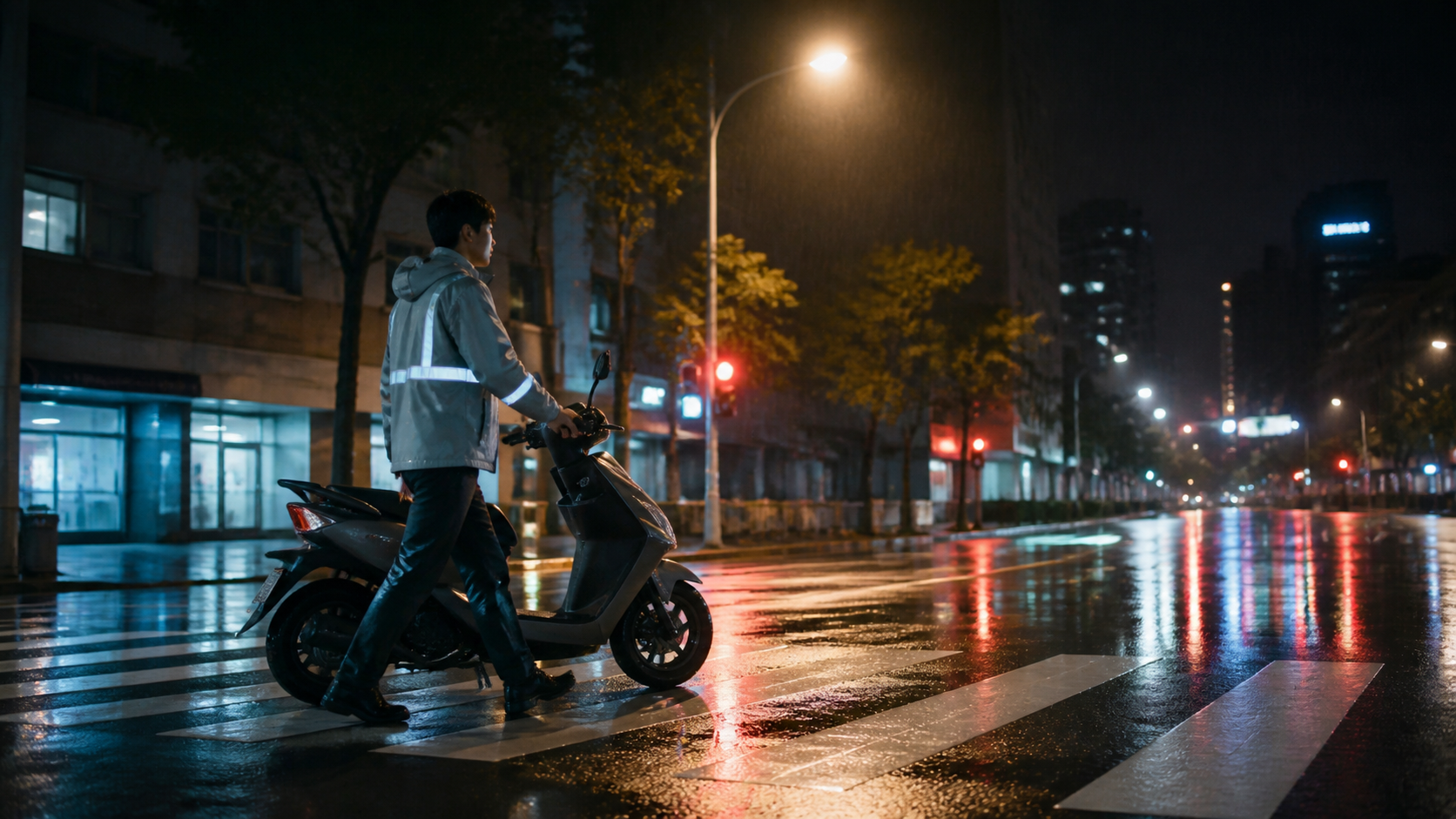
On a rainy night, a food delivery rider led his motorcycle across the crosswalk, his reflective gear clearly visible under the streetlights.

How to Make Yourself Visible While Delivering on Night Shifts: Lighting, Reflectivity, and Safe Parking—A Delivery Checklist

Delivering at night involves more than just turning on your lights. This article covers taillights, brake lights, reflectors, phone mounts, safe parking when picking up and delivering orders, and visibility checks in rainy weather. If you experience a lighting malfunction, poor visibility, or feel unwell, you should stop accepting new orders.

How to Make Yourself Visible While Delivering on Night Shifts: Lighting, Reflectivity, and Safe Parking—A Delivery Checklist Read Post »

Illustration depicting a Taiwanese food delivery rider’s work situation: food delivery app, navigation, and backup phone. Accompanies the article “Don’t Wait Until Your Phone Runs Out of Battery to Switch It Out: A Delivery Rider’s Checklist for Charging, Cooling, and Backup Plans in Case of Connection Loss.”

Don’t Wait Until Your Delivery Phone Runs Out of Battery Before Recharging It: A Delivery Driver’s Checklist for Charging, Cooling, and Backup Plans in Case of Connection Loss

Delivery riders’ smartphones serve multiple purposes: accepting orders, providing navigation, and logging work records. This article outlines a practical contingency plan covering everything from checking battery levels before heading out, recharging during peak hours, and managing heat dissipation to documenting and handling issues when the connection is lost; however, actual settings should follow the instructions provided by the phone’s operating system and the platform app.

Don’t Wait Until Your Delivery Phone Runs Out of Battery Before Recharging It: A Delivery Driver’s Checklist for Charging, Cooling, and Backup Plans in Case of Connection Loss Read Post »

Illustrations depicting the experiences of Taiwanese food delivery riders: visibility and safety precautions when making deliveries in the rain, at night, or in high temperatures. Corresponding article: “Delivering Food in the Summer Isn’t Just About the Heat: Choosing Delivery Times, Gear, and Physical Self-Care in High Temperatures.”

Delivering Food in the Summer Isn't Just About the Heat: Choosing Shift Times, Gear, and Physical Conditioning for High-Temperature Runs

Delivering orders under the blazing July sun comes with a real risk of heatstroke, so your earning strategy needs to adapt to the season as well. In this post, I’ve compiled my own tips on choosing delivery times during the summer, staying cool, staying hydrated, and recognizing warning signs—all for the benefit of both full-time and part-time delivery riders.

Delivering Food in the Summer Isn't Just About the Heat: Choosing Shift Times, Gear, and Physical Conditioning for High-Temperature Runs Read Post »

Illustration depicting a Taiwanese food delivery rider: Safety decisions during earthquakes and sudden disasters. Accompanying article: “Magnitude 7.2 Earthquake Shakes All of Taiwan: Netizens Order Vegetables for the ‘Uranus Chicken Flock’—What Do Delivery Riders Think?”

7.2 Magnitude Earthquake Shakes Taiwan: Netizens Order Vegetables for the "Uranus Chicken Flock"—What Do Delivery Drivers Think?

This article is preserved as a record of online discussions during the 2024 Hualien earthquake and is not intended as news verification or proof of the facts regarding food delivery services. The claim mentioned in the original headline—“ordering delivered vegetables to feed chickens”—originated from social media posts circulating at the time. This site has been unable to obtain independently verifiable order records, statements from the restaurant, or interviews with the parties involved; therefore, we do not describe it as a confirmed event, nor do we draw any inferences regarding the behavior of the delivery driver or the platform.

7.2 Magnitude Earthquake Shakes Taiwan: Netizens Order Vegetables for the "Uranus Chicken Flock"—What Do Delivery Drivers Think? Read Post »

Illustration depicting a Taiwanese food delivery rider: Making safety decisions during earthquakes and sudden disasters, accompanying the article “7.2 Magnitude Earthquake Shakes All of Taiwan: Netizens Order Vegetables for the ‘Uranus Chicken Flock’ to Eat.”

What to Do If You Still Have Delivery Orders After an Earthquake: First, Check for Safety and Official Alerts

In the event of a disaster, delivery riders should first ensure their own safety and check road conditions and warnings issued by the relevant authorities before processing orders in accordance with official notifications from the platform. Do not enter roadblocks, damaged buildings, areas at risk of falling rocks, or areas with standing water in order to complete a delivery, and do not treat content shared on social media as factual information about the disaster.

What to Do If You Still Have Delivery Orders After an Earthquake: First, Check for Safety and Official Alerts Read Post »

Scroll to Top