

Choosing between Uber Eats, foodpanda and Lalamove takes more than a high-earnings screenshot. Results from different areas or working hours are not directly comparable. First check which work you can take, then record receipts, time and costs for the same period. This article provides a comparison method and a blank worksheet, not platform rates, guaranteed hourly earnings or a ranking based on tests by this site.
Check the work available, then record your own figures
Use each platform’s current application pages and app to check service areas, eligible vehicles, documents, insurance, fees and order requirements. Leave unverified fields blank. “Not entered” does not mean zero cost, and an old article is not a reason to buy equipment. These three joining guides are starting points for your checks:
For more articles on delivery work and applications, browse the site’s general delivery category; check each article’s date and official sources before relying on its conditions.
| Platform | Information verified here | How to compare |
|---|---|---|
| Uber Eats | Current official conditions have not been verified for this table. | Mark fees, vehicles and documents as unconfirmed; do not use old figures as current prices. |
| foodpanda | The official application page asks for a city and vehicle. Equipment offers have city conditions. | Check your selected city and offer; do not assume an equipment promotion applies everywhere. |
| Lalamove | The official driver page distinguishes vehicles and regions, with motorcycle joining options including or excluding bags. | Compare equipment and joining costs together, check eligibility, and keep different packages separate. |
This table presents verified distinctions, not a universal earnings ranking. Promotion start and end dates and individual eligibility are not verified in this table. Promotions and joining conditions may change. Check the complete current terms before deciding, and do not enter zero for an unconfirmed fee.
Copy the fields below into your notes or spreadsheet, using one row per platform. Choose similar areas, time slots and vehicle conditions where possible. Comparing different months, or holiday bonuses with ordinary days, can confuse differences in conditions with differences between platforms.
| Platform | Period, area and vehicle | Time invested | Receipts and costs |
|---|---|---|---|
| Uber Eats | Enter your records | Enter your records | Enter your records |
| foodpanda | Enter your records | Enter your records | Enter your records |
| Lalamove | Enter your records | Enter your records | Enter your records |
Separate the entries and use a consistent method
Receipts: Record platform payments, incentives and tips separately and match payments to the period when the work was done. Note payments received in a later week; leave unsettled amounts pending rather than treating them as zero. If the displayed total already includes an incentive or tip, do not add it again. If a fee has already been deducted from a payment, do not deduct the same fee twice. Check the nature of deposits, cash collected on behalf of others and refunds before treating any amount as your own earnings.
Costs: Record fuel or electricity, parking, consumables, repairs and other work-related costs for the same period. If you allocate equipment costs across periods, document your method and apply it consistently across all three platforms. Do not deduct the entire purchase price of a vehicle on only one side of a comparison.
Time: Record deliveries, waiting at shops, waiting for orders, and return or repositioning travel undertaken for the work. When using multiple platforms, do not assign the same minute to two platforms. If you cannot separate the time, keep a shared total rather than forcing a platform ranking. This is a personal comparison record, not a determination of statutory working time or per-order pay.
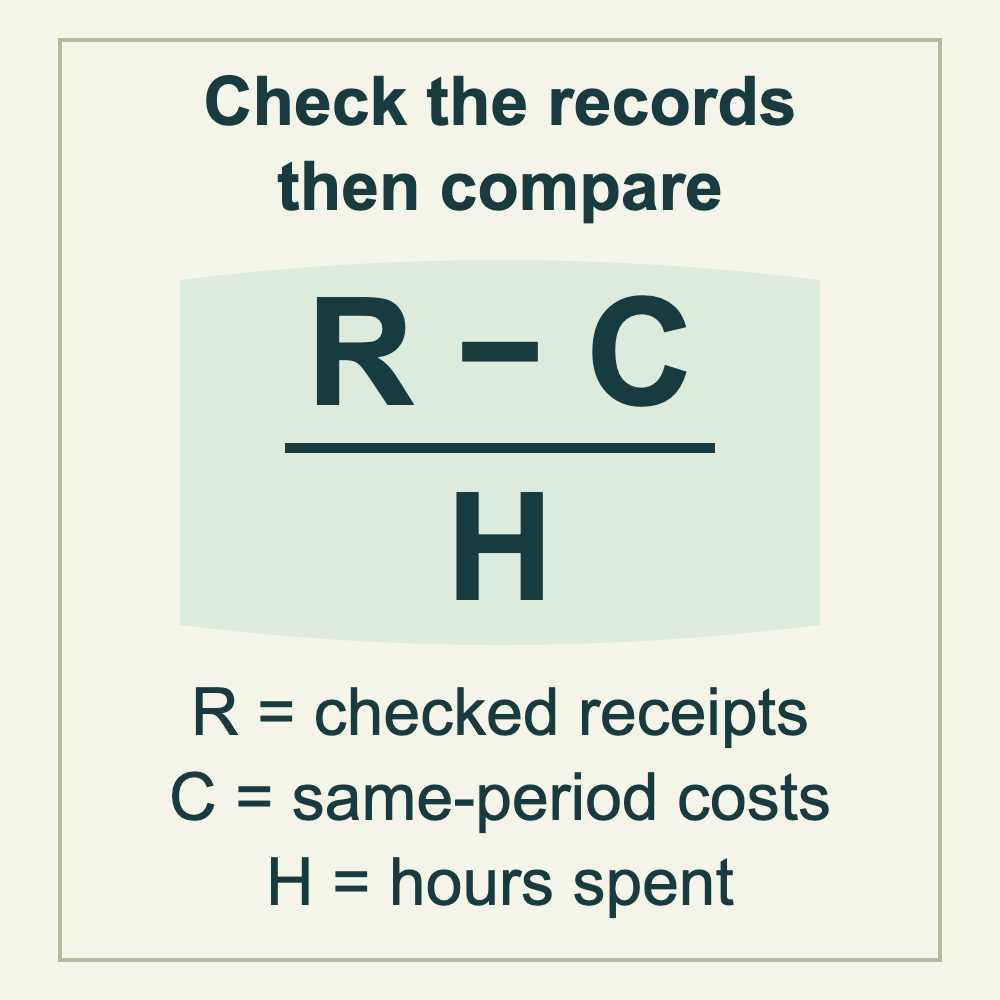
Comparison surplus = receipts for the period − costs included using the method above. Hourly comparison surplus = that surplus ÷ hours invested. Do not treat unknown costs as zero. Do not calculate an hourly result when hours are zero, periods differ or the entries have not been reconciled. The result describes only those records; it is not a promise of future earnings, a complete after-tax income figure or a guarantee of pay owed by a platform.
Use differences to decide what to investigate
If receipts are high but the surplus is low, examine costs. If individual orders look reasonable but the hourly surplus is low, review waiting and return travel. If only one week looks unusually good, separate its incentives and tips. Use only differences supported by your own records when considering another time slot or work arrangement. They do not establish that one platform is best for every rider.
For the statutory calculation of pay for an individual order, consult the Taiwan MOL: delivery remuneration guidance (Traditional Chinese); this personal worksheet does not replace it. The official page is dated 20 July 2026 and was readable when checked on 23 October 2026, Taiwan time.