

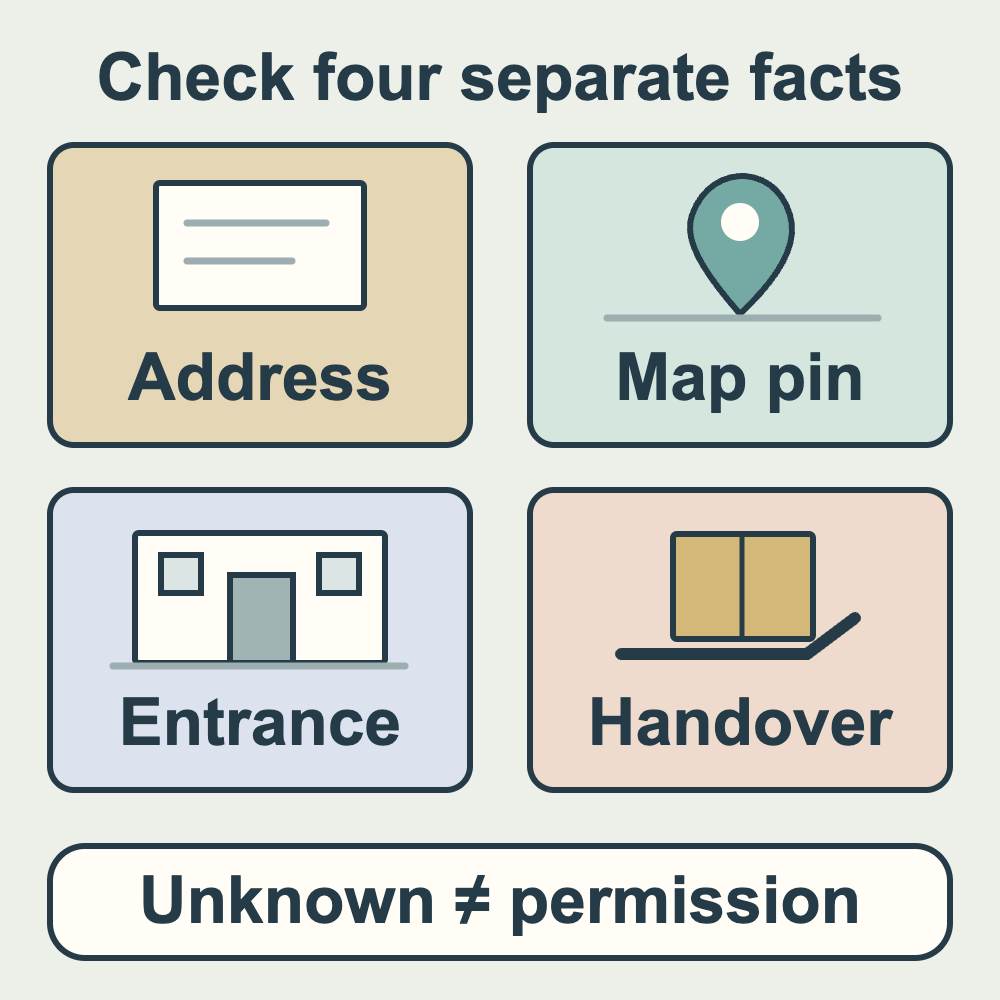
A map pin, the written order address, a building entrance and the actual handover point are separate pieces of information to check. This article does not list “difficult Taipei addresses” or label residents and buildings as trouble spots. The task is to record a recognisable question when this order’s information does not match, rather than guessing who entered something incorrectly.
When you need to check an address or contact someone, first stop safely in a suitable place. Do not switch screens while moving. If new entrance instructions arrive on the road, read them after stopping. See setting navigation before departure and checking it after stopping for parking and phone-use timing. A navigation screen does not establish permission to enter or stop.
Make four private notes: the street, sections, lanes and building number written in the order; which side the map pin falls on; the building number or entrance sign you actually see; and where the other person asks you to hand over the order. Label each separately as shown in the order, seen on site, confirmation received or unconfirmed, and record when it was read or received. Leave missing floor, entrance or handover details as gaps instead of filling them in from the map as confirmed facts.
If the written building number and map pin are on different sides, describe the difference instead of choosing one and pressing ahead. You could ask: “The written address for this order is __. After stopping, I can see an entrance sign saying __; the map pin is on the __ side. Please confirm which entrance to use and where this meal should be handed over.” This is an editorial fill-in question, not an answer already given by a customer or support. Without a reply, the note remains unconfirmed.
For a building with two entrances, separate entrance confirmation from handover confirmation. “Use the back door” may still lack an identifiable sign. Ask for the entrance name, the street it faces and the handover contact. A service desk, management office or someone willing to receive the meal does not establish that this order has an agreed reception arrangement. Do not record your assumption as the other person’s confirmation.
If an entrance, access control, road or stopping place is uncertain, do not enter an unknown area, cross a closed passage or stop somewhere unsuitable just to bring the map distance to zero. Ask the other person to confirm a workable handover method and, if necessary, explain through the normal assistance channel for this order. Someone pointing out a spot does not establish lawful permission to stop or enter. This article does not decide whether any particular location permits parking, entry or handover.
If a new message conflicts with the original text, record both original sentences and the time received. Do not combine them into a third address. No reply, a read receipt or a continuing countdown does not constitute confirmed handover instructions. Ask for the next step through the order’s official channel and record the answer actually received. This does not promise cancellation, an address change, a waiting-time rule or compensation.
Before handover, check that the instructions still refer to the same order you are handling and that the actual method matches what was confirmed. If a different contact ultimately receives it, separately record who confirmed which arrangement through the official channel. Do not mark a handover complete before it happens. When adding times and results later, separate what was known then from information received afterward; do not backdate permission.
These notes are for handling your order. You do not need to publish a customer’s full address, telephone number, access code or resident names. When describing the problem externally, retain only necessary landmarks and differences and avoid screenshots identifying residents. Give order information needed for formal handling only through the normal channel for that order. Do not turn private notes into a public address blacklist identifying customers.
One positioning discrepancy does not establish that the map service, official address numbering or customer is necessarily wrong. See cross-checking differences between location and building-number information for that distinction. This article deals with the delivery information still missing now; find other everyday topics in the general delivery category.