

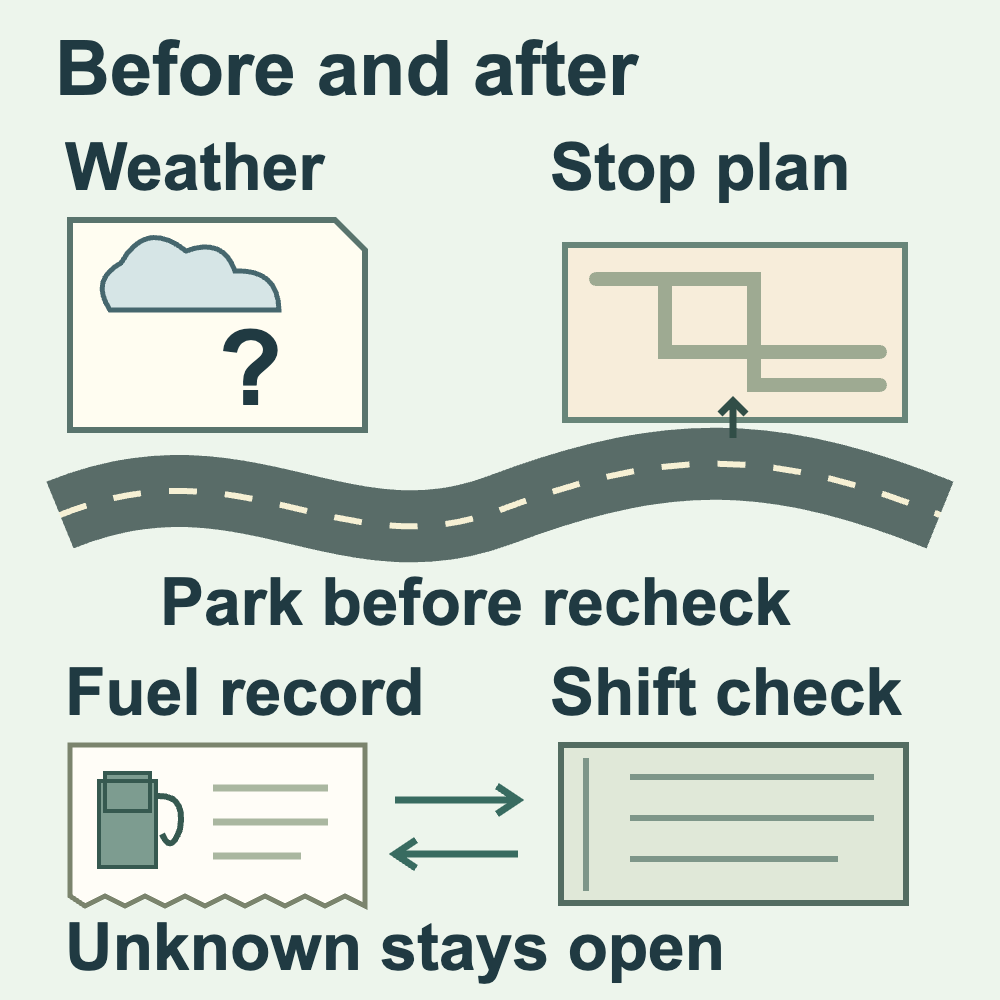
Originally published on 29 August 2026; information checked on 23 October 2026. The original article's weather description for 29 August, weekly fuel prices and forecast for the following week's prices are not a basis for going online now. The weekend preparation question remains, but the article now offers a record you can fill with information for your own outing. Check current information against official announcements.
You are about to head out for weekend deliveries, the platform offers an incentive, and the weather nearby starts changing. One detail is easy to miss: what time is this information from, which area does it cover, and when does it expire? Conditions can differ within the same city or county. Write down your intended area and hours, then check the information that applies. If it is unavailable or unclear, leave it unconfirmed; an old article cannot decide whether you can ride today.
The Central Weather Administration's weather overview (Traditional Chinese) and high-temperature information (Traditional Chinese) are places to check before leaving. The heat page has issue-time and validity fields, along with advice about reducing heat exposure, drinking water and watching for heat illness. This text review did not obtain current warning values for individual areas, so it cannot establish that your route has no warning. Make sure the information is fully displayed when you check it; a blank display does not mean no risk.
| What to check | What to record | If it remains unconfirmed |
|---|---|---|
| Area and hours | Date __; intended area __; start and end times __ | Narrow the plan to an area you can check. Do not apply information from another area directly. |
| Weather information | Time checked __; issue and validity times __; area __; warning text or reason it could not be read __ | Find somewhere you can safely stay and check again. Do not enter yesterday's screenshot as today's information. |
| Route and stopping places | Lawful stopping places for pickup and handover __; alternative if a route cannot be used __; rest location __ | If you have no way to complete the trip safely, do not set off, or park safely first, then use the platform's normal channel to address the order. |
| Person and equipment | Mental and physical condition __; rain gear __; unresolved tyre, brake, light or box/bag fastening issues __ | Address safety issues first. Drinking water cannot replace rest or vehicle repairs. |
| Fuel records | Odometer at departure __; odometer at finish __; fuel type __; refuelling date, litres and amount actually paid __ | Without fuel-consumption data, record the refuelling payment only. Do not call it that day's fuel cost yet. |
| Reassessment | When to check again __; changes on site __; reason for continuing, changing route or pausing __ | If visibility is impaired, floodwater depth is unknown or you cannot stop safely, stop moving before addressing the problem. Do not use an incentive to score the risk. |
The record preserves the basis for a decision; it has no score saying that passing a certain number of checks makes an order safe. Information may be readable before departure and conditions may still change on arrival. Park safely before checking an address or the weather on your phone. If an accepted order cannot be continued safely, keep the time and necessary order details and ask through that platform's normal contact channel. Do not assume cancellation, compensation or exemption from responsibility.
Fuel is easy to misrecord at the moment you pay. Fuel may be left in the tank from yesterday or may not be used until tomorrow. Charging the entire receipt to today distorts comparisons between days. First record the cash paid for refuelling; estimate fuel cost only when you have consumption records on a consistent basis. If comparable refuelling states provide the distance and litres used between two fills, you can estimate fuel use per kilometre for that interval. Until that check is complete, retain “not yet allocable” rather than entering zero.
Mark private trips separately if they are included in the same distance interval. When delivery distance, empty return travel and private distance are mixed, do not attribute the whole interval's cost to one order. This is a recordkeeping convention, not a tax-allocation method. Use your vehicle's requirements and your actual receipt for fuel type and price per litre, rather than the original article's August prices. For other equipment, maintenance and time records, continue with the method for comparing base pay, incentives and actual payments. Both articles explain tools; neither guarantees weekend earnings.
After finishing, add three things: the actual end time, final odometer reading, and which previously unconfirmed issue caused a route change or pause. Before your next outing, check whether those records still apply, then check that outing's weather and on-site conditions again. For other dated announcements, use the news category to check publication dates and applicable periods. An old date alone does not mean the information is still valid.