

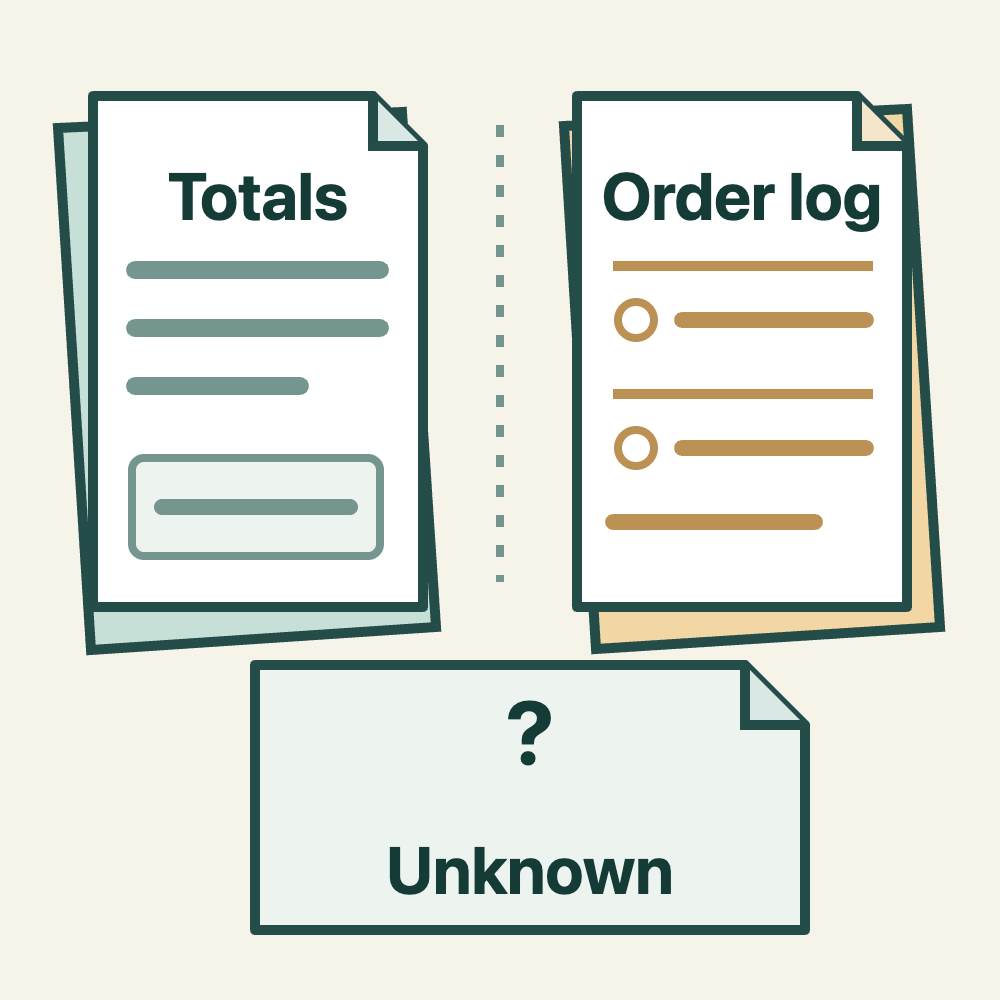
When several orders appear on one screen, how can you tell what you are actually waiting for? This article uses grouped orders to discuss checking several related deliveries. It is not the name of a fixed App menu, and it does not assume that all the orders are on one courier’s vehicle, are collected together, or may be collected and delivered in a different sequence at your discretion. Keep the progress of each order, the scope of the shared screen, and the information still missing separate.
foodpanda’s Pay components page (Traditional Chinese) explains that an acceptance screen may contain one or several orders, and that the amount, distance and time shown are totals; after completion, individual fee details can be viewed separately. This source supports only the display distinction described on that page. It does not let you allocate a total directly to each order, establish how another platform works, or determine the actual route or cause of a particular delay.
First make a shared-screen record: date and time viewed __; platform, screen name and visible version __; order references you can identify __; whether the screen labels the figures as individual, total, or unclear __. If only a total is visible, keep it as not separable. Do not average it into a distance, duration or income per order. References are for your own checking; do not publish complete order numbers, addresses or someone else’s screen.
Then make a separate row for each order you are entitled to view: reference __; which arrival, collection or handover step is currently confirmed __; time __; whether the evidence is something you actually completed, an explanation received, or a screen display __; information still missing __. A step you have not seen remains unknown. A customer who can see only their own order does not need another customer’s information to complete this record.
Separate what you actually did from explanations supplied by other people. For example, you can record the time you arrived at the shop as an arrival observation. If the shop says the food is not ready, separately record when you received that explanation and what it meant; do not fill in a cooking start time from it. A status update is not necessarily the precise time of the event either. Note when the source of a time is unclear.
If the App shows an estimated arrival time, separately record when you looked, the value shown then, and how it later changed. Do not treat the first estimate as a definite promise. A later estimate alone does not establish responsibility on the part of the shop, dispatching, another order, the road, or a particular person. Mark the missing sequence as needing investigation; one map or a single total duration cannot supply the whole route.
Make the next question address an actual gap. For example: ‘At __ I checked the progress of this order __. I know __, but __ is still unclear. What information should I confirm next?’ This is an inquiry you can adapt, not a reply already received from support, permission to cancel, or a promise of compensation. When a reply arrives, separately record its time, which order it applies to, and what it still does not answer.
When handling several orders, keep each collection reference matched to the correct food, and check the next collection or delivery location against the actual information you received. If an address, meal, securing method or instruction is incomplete, first stop appropriately, then explain the gap through the normal support or contact channel. Do not operate a phone while riding or break traffic rules to catch up with an estimate. Another order looking normal does not resolve the problem with this one.
Customers can ask only about the currently confirmed progress of their own order and the next point that can be checked. Do not demand another person’s name, address or order screenshot, and do not press a courier to reply immediately while riding. No reply still means that checkable information has not been obtained. It is not agreement to a delivery arrangement, nor proof that a particular cause must have occurred.
Consider waiting, fees and responsibility separately. This progress record is not a calculation of a statutory service period per order or of wages. It does not establish eligibility for cancellation, a refund, a replacement or reassignment. To check fees, separately compare the current conditions, each payment detail and the actual replies. Keep gaps when information is incomplete; the length of a delay alone does not establish an amount that must be paid.
Afterwards, place the original record beside the new information: which steps now have supporting evidence __; which have only an explanation from someone else __; what is still unknown __; whether another question is needed __. Do not fill earlier unknowns in as though you knew them at the time simply to make the sequence appear complete. One experience is not a general rule for every future grouped delivery.
For a wait and replies at one shop, use the collection-wait record to organise those details separately. For matching and positioning several meals, continue with the loading and handover checks. These address different concrete gaps. Completing a record does not establish safety, responsibility or eligibility.