Rice ball

Illustration depicting the situation of food delivery riders in Taiwan: Delivery systems, rights, and traceable records. Corresponding article: “How to Interpret the Traffic Safety Management Rules for Food Delivery Riders: New Hire Training, Refresher Training, and Safety Preparations for Delivery Runs.”

How to Understand the Traffic Safety Management Rules for Food Delivery Riders: New Hire Training, Refresher Training, and Safety Preparations for Deliveries

Now that the dedicated law for food delivery riders has taken effect, traffic safety management regulations, training, and platform dispatch notifications will all impact riders’ daily lives. This article outlines the training records, safety habits, decisions during rainy weather, and how to preserve evidence for filing complaints—all of which riders should check first.
How to Understand the Traffic Safety Management Rules for Food Delivery Riders: New Hire Training, Refresher Training, and Safety Preparations for Deliveries Read Post »

Illustration depicting the daily life of a Taiwanese food delivery rider: delivery motorcycle, road conditions, and pre-shift preparations. Accompanies the article “How to Make the Most Money During Peak Hours: The Logic Behind Skipping Orders, Combining Orders, and Selecting Orders.”

How to Accept Orders Most Profitably During Peak Hours: Decision-Making Logic for Skipping, Combining, and Selecting Orders

Taking every order during peak hours may actually lower your hourly wage. This article outlines how to assess pickup, delivery, waiting times, route optimization for combined orders, and return trip costs, helping delivery riders set their own order acceptance thresholds based on their schedules and performance data—rather than relying on a single route as a guarantee of income.

How to Accept Orders Most Profitably During Peak Hours: Decision-Making Logic for Skipping, Combining, and Selecting Orders Read Post »

Illustration depicting the situation of food delivery riders in Taiwan: the delivery system, rights, and traceable records, corresponding to the article “What to Do When Facing a Delivery Dispute: A Practical Guide—Gather Evidence First, Explain the Situation Next, and File a Complaint Last.”

What to Do When You Encounter a Food Delivery Dispute: A Practical Step-by-Step Guide—First, Gather Evidence; Next, Explain the Situation; Finally, File a Complaint

When you encounter missing items, delivery disputes, customer complaint warnings, or account issues while working as a food delivery rider, be sure to document the order details, timeline, and facts of the situation. Here’s a summary of the complaint process, evidence collection, and deadlines under the new regulations effective July 21, so delivery riders don’t have to rely on vague memories to protect themselves.

What to Do When You Encounter a Food Delivery Dispute: A Practical Step-by-Step Guide—First, Gather Evidence; Next, Explain the Situation; Finally, File a Complaint Read Post »

Illustration depicting the situation of food delivery riders in Taiwan: Delivery systems, rights, and traceable records. Corresponding article: “What to Do When a Restaurant Takes Too Long to Prepare an Order? Delivery Riders Break Down Time Tracking, Communication, and Complaints.”

What should you do if a customer has to wait too long for their meal? Delivery drivers should handle time tracking, communication, and complaints separately.

Waiting too long for orders not only slows down order processing but also makes pay stubs and follow-up explanations unclear. Focusing on in-store arrival, estimated arrival times, pickup, and delivery records, this guide outlines the daily wait-handling procedures that delivery riders can use, as well as methods for reviewing issues using the new pay stub format.

What should you do if a customer has to wait too long for their meal? Delivery drivers should handle time tracking, communication, and complaints separately. Read Post »

Illustration depicting the situation of food delivery riders in Taiwan: delivery systems, rights, and traceable records. Corresponding article: “Understanding Insurance for Food Delivery Riders: A Practical Guide to Platform Coverage, Workers’ Compensation, and Third-Party Liability.”

How to Evaluate Delivery Driver Insurance: A Practical Guide to Platform Coverage, Workers’ Compensation, and Third-Party Liability

Group accident insurance, third-party liability coverage, and workers’ compensation insurance for delivery riders vary in terms of who is covered and the conditions under which they take effect. We’ve compiled the latest platform rules, information on enrolling in workers’ compensation, and methods for documenting accidents—so you’ll know what to check before an incident occurs.

How to Evaluate Delivery Driver Insurance: A Practical Guide to Platform Coverage, Workers’ Compensation, and Third-Party Liability Read Post »

Illustration depicting the situation of food delivery riders in Taiwan: visibility and safety precautions when making deliveries in the rain, at night, or in high temperatures. Corresponding article: “How to Avoid Slipping While Delivering Food in the Rain: Safety Checks Before Leaving, When Picking Up Orders, and Upon Delivery.”

How to Avoid Slipping While Delivering Food in the Rain: Safety Checks Before You Leave, When Picking Up Orders, and Upon Delivery

When delivering food on rainy days, the biggest concern isn’t getting wet—it’s the simultaneous deterioration of visibility, traction, and parking conditions. This article outlines pre-trip checks, anti-slip measures while on the road, procedures for picking up and delivering orders, and criteria for suspending deliveries. It also reminds riders to make decisions based on information from the Central Weather Bureau, local weather alerts, and platform announcements.

How to Avoid Slipping While Delivering Food in the Rain: Safety Checks Before You Leave, When Picking Up Orders, and Upon Delivery Read Post »

Illustrations depicting the work of Taiwanese food delivery riders: meal delivery, temperature control, and pickup procedures, accompanying the article “It’s Not Just About Fitting Everything in the Insulated Box: Food Safety Procedures for Delivery Riders—Pickup, Separation, Cleaning, and Delivery.”

It’s Not Enough for an Insulated Box to Just Fit the Food: Food Safety Procedures for Delivery Drivers—Picking Up, Separating, Cleaning, and Delivering Meals

Food safety for delivery meals depends on every step of the process—from the cleanliness of the insulated boxes and whether hot and cold items are stored separately, to pickup, stops along the route, and delivery. Break down official requirements into practical procedures that can be followed during a delivery run to minimize the risk of issues with the food while it’s on the road.

It’s Not Enough for an Insulated Box to Just Fit the Food: Food Safety Procedures for Delivery Drivers—Picking Up, Separating, Cleaning, and Delivering Meals Read Post »

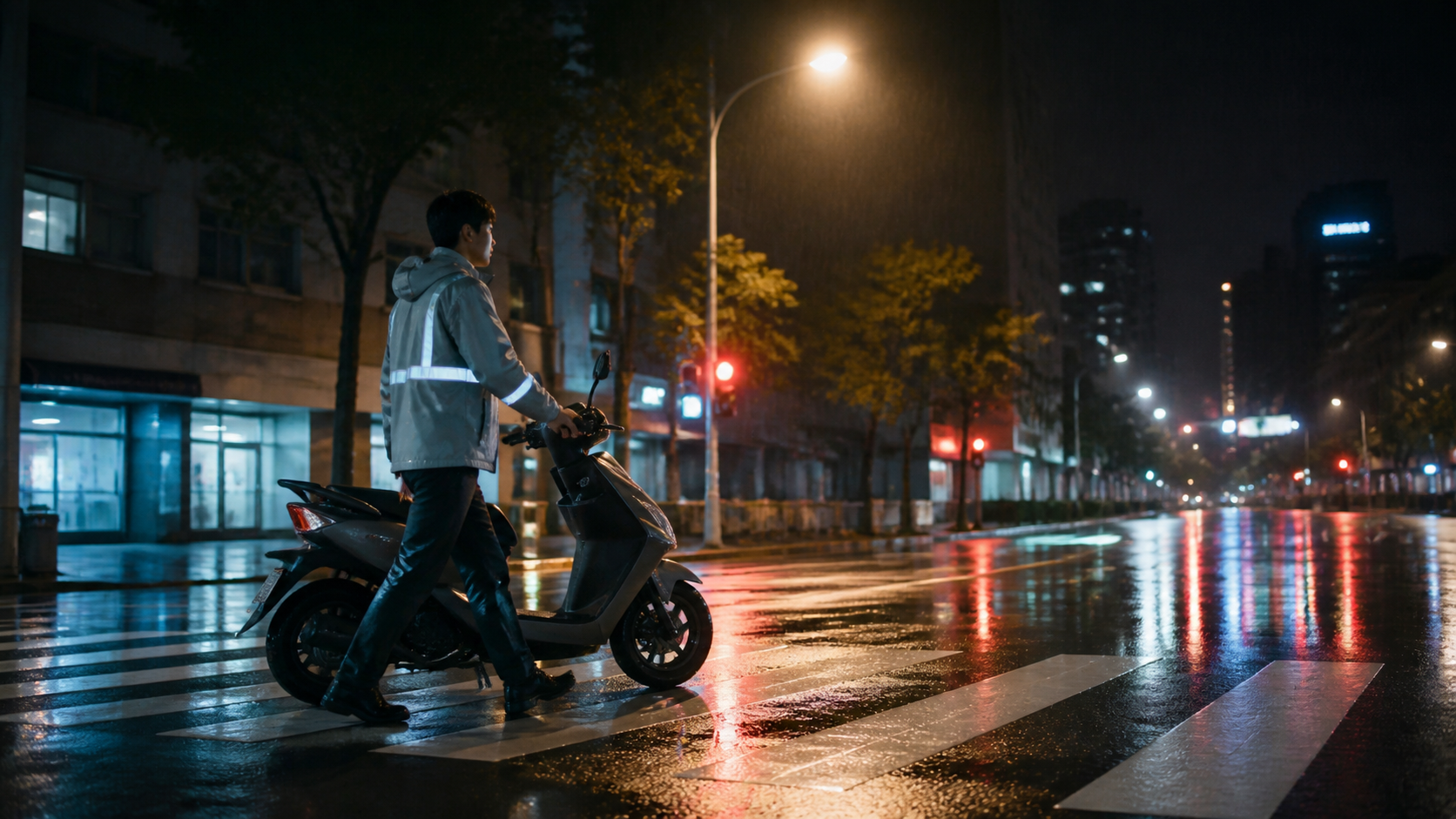
On a rainy night, a food delivery rider led his motorcycle across the crosswalk, his reflective gear clearly visible under the streetlights.

How to Make Yourself Visible While Delivering on Night Shifts: Lighting, Reflectivity, and Safe Parking—A Delivery Checklist

Delivering at night involves more than just turning on your lights. This article covers taillights, brake lights, reflectors, phone mounts, safe parking when picking up and delivering orders, and visibility checks in rainy weather. If you experience a lighting malfunction, poor visibility, or feel unwell, you should stop accepting new orders.

How to Make Yourself Visible While Delivering on Night Shifts: Lighting, Reflectivity, and Safe Parking—A Delivery Checklist Read Post »

Illustration depicting a Taiwanese food delivery rider’s work situation: food delivery app, navigation, and backup phone. Accompanies the article “Don’t Wait Until Your Phone Runs Out of Battery to Switch It Out: A Delivery Rider’s Checklist for Charging, Cooling, and Backup Plans in Case of Connection Loss.”

Don’t Wait Until Your Delivery Phone Runs Out of Battery Before Recharging It: A Delivery Driver’s Checklist for Charging, Cooling, and Backup Plans in Case of Connection Loss

Delivery riders’ smartphones serve multiple purposes: accepting orders, providing navigation, and logging work records. This article outlines a practical contingency plan covering everything from checking battery levels before heading out, recharging during peak hours, and managing heat dissipation to documenting and handling issues when the connection is lost; however, actual settings should follow the instructions provided by the phone’s operating system and the platform app.

Don’t Wait Until Your Delivery Phone Runs Out of Battery Before Recharging It: A Delivery Driver’s Checklist for Charging, Cooling, and Backup Plans in Case of Connection Loss Read Post »

Illustration depicting the reality of food delivery riders in Taiwan: records of delivery income, expenses, and completed orders, accompanying the article “Is Making 2,000 to 3,000 a Day as a Food Delivery Rider That Great? Once You Subtract These Hidden Costs, Your ‘Real Hourly Wage’ Is What Matters.”

Does making 2,000 to 3,000 a day as a food delivery driver sound great? Once you factor in these hidden costs, your “real hourly wage” is what really matters.

On paper, earning 2,000 to 3,000 after ten hours of work sounds good, but once you factor in gas, maintenance, vehicle depreciation, mobile data, and taxes, the actual hourly wage you take home is often overestimated. The site administrator shares a list of often-overlooked hidden costs in food delivery, explains how to calculate your true hourly wage, and offers practical insights on where to cut costs and where not to.

Does making 2,000 to 3,000 a day as a food delivery driver sound great? Once you factor in these hidden costs, your “real hourly wage” is what really matters. Read Post »

Scroll to Top